University Clinic Series: Heritage and Healing
(1) A Journey of Learning Traditional Chinese Medicine Through the Fragrance of Herbs
Author: Alice Lin / Master’s Student and Clinical Intern, University of East-West Medicine
Fifteen years ago, I first walked into the University of East-West Medicine Clinic as a patient, searching for a renowned physician who could relieve the chronic lower back pain that had troubled me for years. At the time, I never imagined that this medical visit would begin a lifelong connection with the university—one that would span fifteen years.
Today, fifteen years later, I have become a student at the University of East-West Medicine. My journey from patient to intern studying Traditional Chinese Medicine (TCM) is more than a change in identity—it is the fulfillment of a long-held dream.
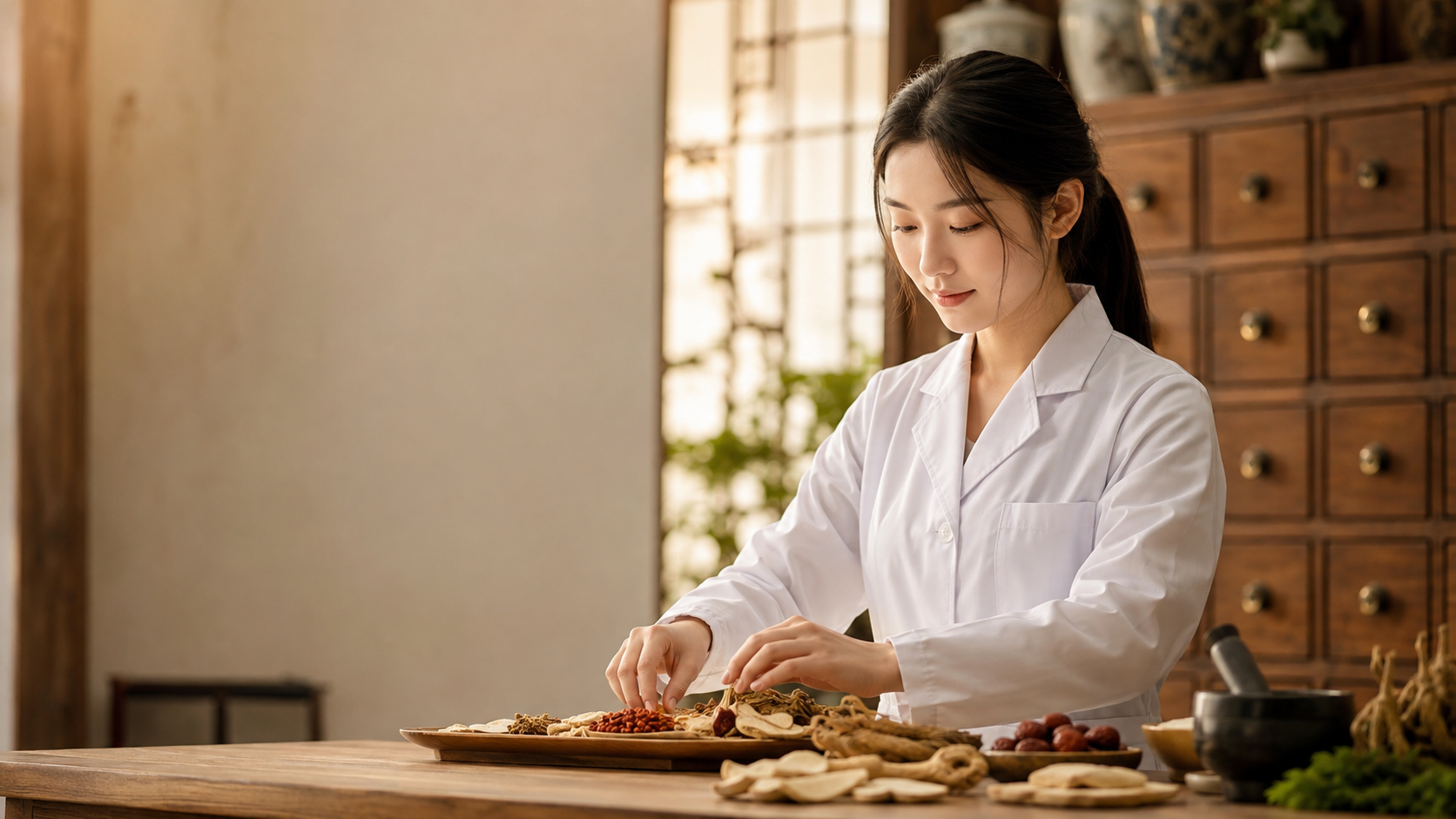
When I first began my clinical internship, what impressed me most was not the busy patient care, but the gentle fragrance of Chinese herbs that filled the air. It was a unique aroma—a harmonious blend of fresh botanicals and rich medicinal herbs—completely different from the sterile scent of disinfectants found in conventional hospitals.
As my studies deepened, I gradually realized that this herbal fragrance comes not only from the medicinal plants themselves, but also from thousands of years of Chinese medical wisdom and cultural heritage.
Whenever I breathe in this familiar scent, I think of the countless generations of physicians who dedicated their lives to healing others. Their compassion and commitment remind me that the inheritance of Traditional Chinese Medicine has never been easy.
In the clinic, I have watched patients arrive burdened with pain and gradually regain their health through acupuncture, herbal medicine, and Tuina therapy. At those moments, I realized that the fragrance of herbs symbolizes far more than medicine—it represents hope, trust, and healing.
Today, every time I enter the clinic and catch that familiar herbal aroma, I feel a profound sense of belonging. It reminds me that Traditional Chinese Medicine is not merely a medical practice; it is a cultural legacy and a lifelong responsibility.
Fifteen years ago, I came seeking healing. Today, I have returned in pursuit of my dream.
As I continue my journey, I hope to refine my medical skills with humility, dedicate myself to serving more patients, and help pass on the wisdom of Traditional Chinese Medicine so that its healing fragrance may continue to protect the health and hope of future generations.
(2) The Wall of Classical and Proven Herbal Formulas
Author: Alice Lin / Master’s Student and Clinical Intern, University of East-West Medicine
Upon entering the University of East-West Medicine Clinic, visitors are welcomed not only by the gentle fragrance of medicinal herbs but also by a remarkable cultural display entitled “Collection of Classical and Proven Herbal Formulas.”
This is far more than a decorative wall—it is a bridge connecting ancient wisdom with modern clinical practice.
Displayed across the wall are beautifully preserved herbal formula exhibits, each introducing the composition, characteristics, and clinical applications of a classic prescription. From the renowned formulas of the Shang Han Lun (Treatise on Cold Damage Disorders) and the Jin Gui Yao Lue (Essential Prescriptions of the Golden Cabinet) to valuable empirical formulas developed by generations of distinguished physicians, every prescription reflects centuries of clinical experience, innovation, and medical wisdom.
For patients, this display transforms complex TCM concepts into something visual and understandable. It offers insight into medicinal herbs, formula composition, and therapeutic principles, fostering greater understanding and confidence in Traditional Chinese Medicine.
For students, the wall serves as a silent teacher. Each day we pause to observe the herbs and formulas, allowing textbook knowledge to come alive before our eyes. It reminds every aspiring practitioner that learning TCM is not simply memorizing prescriptions—it is understanding the medical principles behind them and carrying forward a tradition of compassionate healing.
For clinicians, the wall represents a platform where classical formulas and modern clinical experience complement one another, reflecting the TCM philosophy of “preserving tradition while embracing innovation.” Classical medicine is not a relic of history; it continues to evolve through contemporary clinical practice.
A single wall preserves thousands of years of medical heritage.
A single prescription embodies generations of physicians’ wisdom and compassion.
The University of East-West Medicine Clinic hopes this display will inspire more people to understand, appreciate, and trust Traditional Chinese Medicine while preserving its enduring legacy for future generations.
(3) Connecting with the Great Masters of Traditional Chinese Medicine
Author: Alice Lin/ Master’s Student and Clinical Intern, University of East-West Medicine
Walking into the University of East-West Medicine Clinic, visitors are greeted not only by the soothing fragrance of Chinese herbs but also by an inspiring gallery honoring the great masters of Traditional Chinese Medicine.
Displayed are portraits of five legendary physicians: Bian Que, Zhang Zhongjing, Hua Tuo, Sun Simiao, and Li Shizhen. Their timeless gazes seem to transcend centuries, silently telling the story of Chinese medicine while passing on its wisdom and spirit.
This gallery is more than an exhibition—it is a lifelong classroom without walls.
For patients, the gallery serves as a window into the rich history of Traditional Chinese Medicine. It demonstrates that TCM is the product of thousands of years of careful observation, exploration, and dedication to understanding life, health, and nature.
For students, these portraits become silent mentors. Passing them each day feels like receiving a quiet lesson in professionalism and humanity. They remind us that practicing medicine is not merely mastering techniques—it is accepting the profound responsibility of protecting human life.
Studying TCM requires more than reading classical texts and refining clinical skills. It calls upon us to inherit the spirit of “benevolence and excellence in medicine” (仁心仁术,大医精诚), cultivating both medical ethics and professional competence.
From the Huangdi Neijing, which established the theoretical foundations of Chinese medicine, to the Treatise on Cold Damage Disorders, which pioneered syndrome differentiation, from Sun Simiao’s Essential Prescriptions Worth a Thousand Gold to Li Shizhen’s Compendium of Materia Medica, every milestone represents generations of physicians devoted to advancing medical knowledge.
This cultural wall represents far more than historical figures—it embodies the soul of Traditional Chinese Medicine.
Every time I pause before these portraits, I reflect upon the countless generations who devoted themselves to understanding life and preserving health. Their perseverance has allowed this priceless medical heritage to reach our generation.
Their legacy reminds us that inheriting Traditional Chinese Medicine means far more than learning prescriptions, herbs, or acupuncture techniques. It means inheriting a mission—to respect life, relieve suffering, and serve humanity with compassion.
May every visitor to the University of East-West Medicine Clinic experience the profound cultural heritage and timeless wisdom represented by these great masters. May we honor their example, preserve tradition while embracing innovation, and ensure that the brilliance of Traditional Chinese Medicine continues to illuminate the future.
(4) A Thousand Years of Wisdom Within the Apothecary Cabinets — Inside the University of East-West Medicine Pharmacy
Author: Alice Lin/ Master’s Student and Clinical Intern, University of East-West Medicine
Entering the University of East-West Medicine Clinic, one is immediately comforted by the gentle fragrance of medicinal herbs. Yet what captures the eye most are the beautifully arranged rows of traditional Chinese medicine cabinets.
Each elegant wooden drawer carefully stores hundreds of medicinal herbs, preserving not only the medicines themselves but also thousands of years of Chinese medical wisdom.
This pharmacy is much more than a dispensary—it is one of the most authentic and vibrant classrooms of Traditional Chinese Medicine.
Every drawer bears its own name and holds its own history.
Astragalus replenishes Qi. Angelica nourishes the blood. Atractylodes strengthen the spleen. Poria drains dampness. Aged Tangerine Peel regulates Qi. Licorice harmonizes herbal formulas.
Each herb possesses unique medicinal properties, therapeutic functions, and clinical significance. Carefully organized within the traditional cabinets, they seem like faithful old friends quietly waiting for physicians to prescribe them according to each patient’s condition.
For TCM students, learning herbs involves far more than memorizing names—it requires understanding their nature, compatibility, and clinical applications.
Working in the pharmacy teaches students much more than dispensing medicine.
Each prescription demands careful verification, precise identification of herbs, accurate weighing, and thorough quality inspection. What appears to be a simple task actually reflects the precision and discipline at the heart of Traditional Chinese Medicine.
There is no assembly-line production here. Every prescription carries a patient’s hope, and every herb represents the trust placed in the physician.
Perhaps the most unforgettable aspect of the pharmacy is its distinctive herbal fragrance.
Unlike perfume or flowers, it is a subtle blend of plants, earth, and time itself. Every time a drawer is opened, this familiar aroma gently fills the room, as if quietly recounting the thousands of years of history behind Traditional Chinese Medicine.
Standing before the herb cabinets, I often wonder how many generations of physicians patiently observed nature, experimented with medicinal plants, and accumulated clinical knowledge before today’s comprehensive materia medica came into existence.
These cabinets hold far more than herbs—they preserve humanity’s enduring pursuit of health and understanding of nature.
For patients, the pharmacy marks the beginning of healing.
For students, it is an essential classroom where professional responsibility is cultivated.
Here we learn not only to recognize herbs and prepare prescriptions, but also to care for every patient with reverence, precision, and compassion. Every herb dispensed, every gram weighed, and every prescription checked strengthens both our clinical competence and our ethical commitment.
Standing before the traditional apothecary cabinets, I deeply realize that what we inherit is far more than herbs or prescriptions—we inherit a cultural legacy that spans thousands of years.
The pharmacy is perhaps the warmest place in the clinic.
It is filled with the fragrance of medicinal herbs, enriched by the wisdom of Traditional Chinese Medicine, and sustained by generations of compassionate physicians. From ancient apothecary cabinets to today’s modern clinic, from classical materia medica to contemporary clinical practice, Traditional Chinese Medicine continues to thrive by preserving its traditions while embracing innovation.
May every visitor who enters the University of East-West Medicine Pharmacy experience the warmth and depth of Chinese medical culture.
May every TCM student continue learning with humility, growing into physicians who possess excellent clinical skills, noble ethics, and a deep sense of responsibility, ensuring that the timeless wisdom of Traditional Chinese Medicine continues to benefit generations to come.
🎓 Applications Are Now Open for the Professional Doctorate (PD) Program at the University of East-West Medicine!
With 28 years of excellence in medical education, the University of East-West Medicine (UEWM) is now accepting applications for its Professional Doctorate (PD) Program.
For nearly three decades, UEWM has been committed to integrating the wisdom of Traditional Chinese Medicine with modern healthcare, educating outstanding healthcare professionals from around the world. The PD Program is designed for practitioners and healthcare professionals seeking advanced clinical expertise, academic growth, leadership development, and global perspectives in integrative medicine.
✨ Why Choose the UEWM PD Program? • 28 years of academic excellence and international recognition
• Integrative approach combining Traditional Chinese Medicine and Western Medicine • Distinguished faculty with extensive clinical and academic experience • Practice-oriented curriculum emphasizing clinical excellence and research • Flexible learning opportunities for working professionals • Enhance your professional credentials and global career opportunities
Take the next step in your professional journey and become part of a global community dedicated to advancing the future of integrative medicine.
📞 Admissions: +1 (408) 733-8889 🌐 Website: www.uewm.edu
University of East-West Medicine – Empowering Healthcare Leaders for the Future.
Click here to read this article in Chinese: 药香熏陶下的中医求学路 – UEWM

You may also like
Welcome to the Fall 2026 Chinese Medicine Semester
How to Identify Ashi Points for Musculoskeletal Pain