
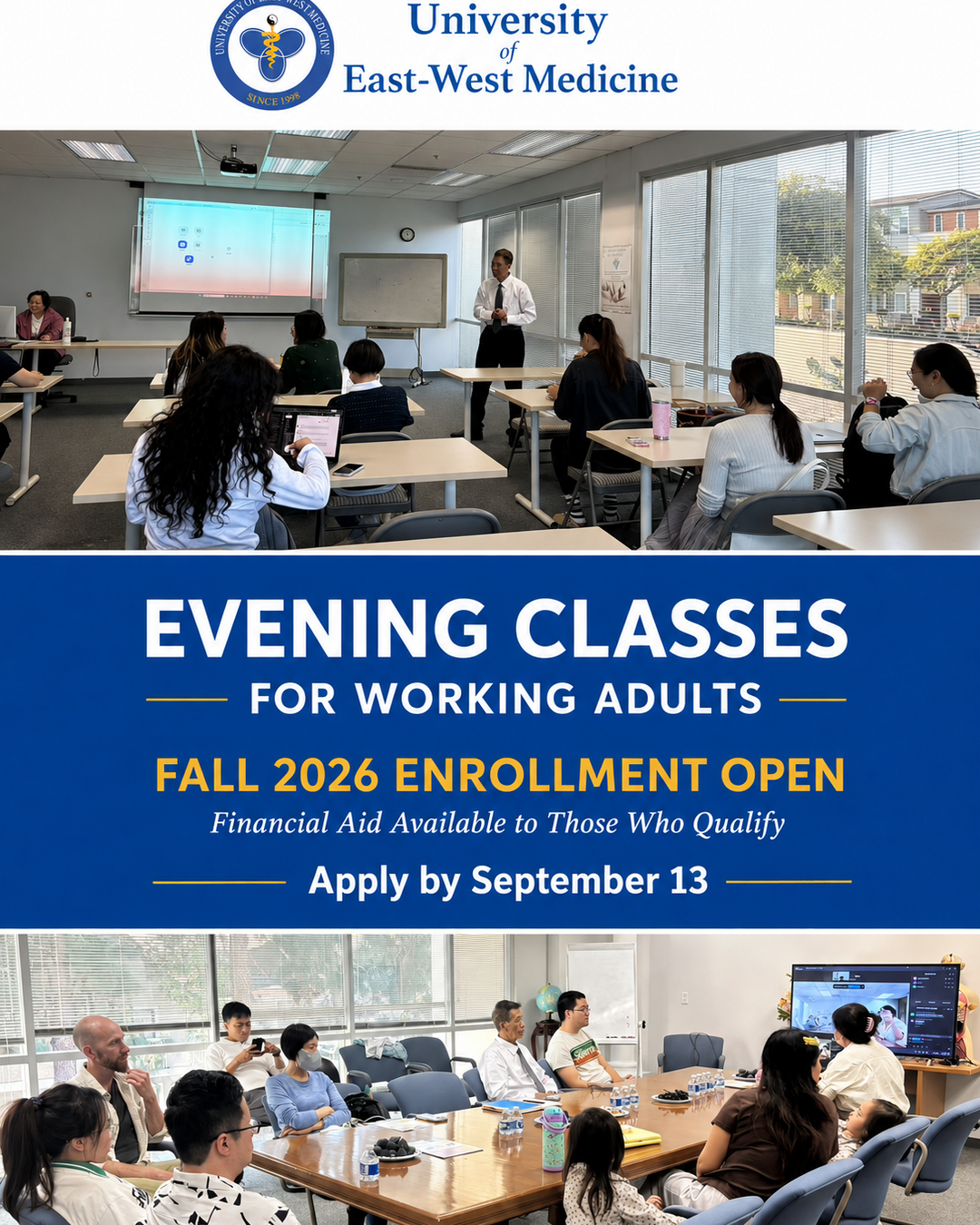
UEWM evening classes: Keep learning while you work
UEWM evening classes may offer working adults a more manageable way to continue their education without immediately leaving the workforce. For anyone considering graduate study in East-West medicine or acupuncture education, the key is to evaluate the learning format, time commitment, personal responsibilities, and long-term goals before making a decision.
Returning to school while employed can be rewarding, but it also requires realistic planning. Evening study may help create separation between work hours and class time, yet it does not remove the need for reading, assignments, preparation, and rest. A thoughtful plan can help prospective students determine whether UEWM evening classes fit their schedules, finances, family responsibilities, and educational interests.
Why working adults consider evening study
Many professionals postpone further education because they assume a traditional daytime schedule will conflict with employment. Evening classes can provide another option for people who want to build knowledge while continuing to earn an income or meet existing obligations. The format may be especially relevant to adults who have already developed workplace routines and want to add structured learning without making an immediate, all-or-nothing career change.
Continuing education can also support personal development. Students may gain a deeper understanding of a subject, explore a new professional direction, or strengthen the academic foundation for future decisions. In the context of the University of East-West Medicine, learners interested in East-West medicine and acupuncture education may be looking for a focused graduate learning environment that connects their interests with a formal program of study.
Still, evening study is not automatically easier than daytime study. A class that begins after work may reduce commuting flexibility, limit time for meals, or compete with family routines. The value of the schedule depends on how well it matches a student’s actual life rather than an idealized version of it.
Assessing whether the schedule fits
Before applying or enrolling, map a typical week in detail. Include work hours, commute time, household responsibilities, exercise, meals, sleep, and existing appointments. Then identify the hours available for class preparation. This exercise can reveal whether the plan is sustainable or whether it depends on consistently giving up rest and recovery.
Questions to ask before committing
- How many evenings each week would be occupied by class or required study?
- How long would travel take between work, home, and campus or another learning location?
- What responsibilities are fixed, and which ones could be adjusted?
- How much uninterrupted time is available for reading, writing, and review?
- Would the schedule remain workable during busy periods at work?
- What academic, enrollment, and attendance details should be confirmed directly with the university?
It may help to test the proposed routine for several weeks before beginning a program. Use that period to practice preparing meals, setting aside study blocks, and protecting a consistent bedtime. A trial run cannot predict every challenge, but it can expose avoidable conflicts and encourage more realistic expectations.
Building a sustainable work-and-study routine
Successful adult learners often rely on systems rather than motivation alone. A calendar can reserve class time, study periods, deadlines, and recovery time. Breaking large assignments into smaller tasks may make progress easier when only short blocks are available. For example, one session could be used for reading, another for outlining, and a later session for drafting or review.
It is also useful to distinguish between essential and optional commitments. During an academically demanding period, students may need to simplify errands, limit nonessential activities, or ask household members for practical support. These adjustments should be discussed openly rather than assumed. A shared understanding of the schedule can reduce interruptions and prevent one person from carrying an unrealistic load.
Protecting energy, attention, and recovery
Time is only one part of the equation. Concentration and physical energy affect how efficiently a person learns. Regular sleep, reasonable meal planning, and short breaks can support attention during evening study. Students should be cautious about building a routine that leaves no margin for illness, unexpected work demands, or personal needs.
Commuting and transition time also deserve attention. A short buffer between work and class may allow someone to change locations, eat, organize materials, and shift mentally into learning mode. After class, a brief review can be useful, but trying to complete every task late at night may undermine the next workday. A balanced routine should include a clear stopping point.
Preparing financially and academically
Education decisions involve more than tuition. Prospective students may also need to consider books, equipment, transportation, technology, meals away from home, and reduced flexibility for additional work hours. Creating a simple budget can clarify the full cost of attendance and identify questions to ask before enrollment.
Academic preparation matters as well. Review publicly available program information and confirm current requirements, course sequencing, attendance expectations, and estimated workload through appropriate university channels. Ask how evening scheduling interacts with required learning activities and whether any components may require daytime availability. Exact arrangements can change, so current information should guide the decision.
Working learners may benefit from explaining their goals early. A clear understanding of why they want to study can help them prioritize when the schedule becomes demanding. Goals might include gaining foundational knowledge, preparing for a future educational step, or exploring whether East-West medicine and acupuncture education aligns with their interests. The goal should be personal and specific enough to guide practical choices.
Making an informed decision
Choosing UEWM evening classes should involve more than asking whether classes occur after normal work hours. Consider the entire experience: the academic expectations, travel, independent study, financial impact, family schedule, and available support. A schedule that appears convenient on paper may not be workable if it leaves no time for preparation or recovery.

Compare the proposed commitment with your current priorities. If your job has seasonal deadlines, identify how those periods may affect attendance and study time. If you have caregiving responsibilities, discuss backup plans before the term begins. If finances are uncertain, gather current cost information and make a conservative budget rather than relying on best-case assumptions.
It is also reasonable to recognize that the right decision may be to wait, reduce other commitments, or gather more information first. Delaying enrollment can be a responsible choice when the current schedule is already unsustainable. Conversely, a well-planned evening program may be a practical path for someone with stable support, clear goals, and enough time for both academic work and rest.
For prospective students, the next step is careful verification. Review current information from the University of East-West Medicine, prepare specific questions, and compare the expected commitment with your real weekly schedule. With honest planning, UEWM evening classes can be evaluated as part of a broader strategy for continuing education while maintaining employment and personal responsibilities.
Responsible next steps
Review your current work, family, financial, and study commitments, then contact the University of East-West Medicine through its official channels to confirm current program details and determine whether the schedule fits your circumstances.
This content is educational and informational only and is not medical advice.
Related resources
Authoritative references

You may also like

Welcome to the Fall 2026 Chinese Medicine Semester

How to Identify Ashi Points for Musculoskeletal Pain