药香熏陶下的中医求学路 University Clinic Series: Heritage, Healing, and the Living Tradition of Chinese Medicine
University Clinic Series: Heritage, Healing, and the Living Tradition of Chinese Medicine
-300x225.jpeg)
Fifteen years later, I became a student at the University of East-West Medicine. My journey from receiving care as a patient to studying Traditional Chinese Medicine represents more than a change in role. It is the realization of a deeply held dream.
The clinic is not only a place where patients receive acupuncture, herbal medicine, and other traditional therapies. It is also a learning environment where students connect classical knowledge with supervised clinical experience, observe the responsibilities of healthcare practice, and begin preparing for careers devoted to the well-being of others.
Part One: Returning to the Fragrance of Chinese Medicine
-2-300x225.jpeg)
When I first began my clinical internship, what stayed with me most was not the pace of the clinic, but the fragrance of Chinese herbs in the air. It was a distinctive combination of plants, roots, bark, seeds, and other natural materials—a scent completely different from the disinfectant commonly associated with modern medical facilities.
As my studies progressed, I came to understand that this fragrance represented far more than the herbs themselves. It carried the knowledge, observation, experience, and cultural wisdom accumulated through generations of Chinese medical practice.
Whenever I encounter that familiar aroma, I think of the physicians and scholars who devoted their lives to relieving suffering and advancing medical knowledge. I am also reminded that preserving Traditional Chinese Medicine requires patience, discipline, careful study, and responsible clinical practice.
In the clinic, I have seen patients arrive with pain, discomfort, or long-standing health concerns. Through supervised care that may include acupuncture, therapeutic techniques, and Chinese herbal medicine, patients can participate in an individualized approach to health and recovery.
For me, the fragrance of Chinese medicine has come to symbolize hope, trust, healing, and responsibility. It reminds me that Traditional Chinese Medicine is not only a system of healthcare. It is also a cultural inheritance that each generation must study, protect, and carry forward with integrity.
From Patient to Clinical Intern
Fifteen years ago, I came to the clinic because of pain. Fifteen years later, I returned because of a dream. I now hope to continue developing my knowledge and clinical abilities so that I may serve future patients with humility, compassion, and respect.
Part Two: A Wall of Classical and Clinically Tested Formulas
-3-300x225.jpeg)
One of the most distinctive features inside the UEWM clinic is a cultural and educational display devoted to classical and clinically tested Chinese herbal formulas.
This is more than a decorative wall. It is a knowledge resource that connects ancient medical literature with modern education and supervised clinical practice.
Each display presents information about a traditional formula, including its ingredients, characteristics, historical background, and recognized applications within the framework of Traditional Chinese Medicine. The collection reflects influential formulas associated with classical works such as the Shang Han Lun and the Jin Gui Yao Lue, as well as formulas developed and refined through generations of clinical experience.
Helping Patients Better Understand Chinese Medicine
For patients and visitors, the display makes complex medical concepts more visible and approachable. It offers an opportunity to recognize commonly used herbs and understand that a traditional formula is not simply a random collection of ingredients.
Instead, each formula reflects a carefully considered combination based on traditional theories of pattern identification, balance, compatibility, and individualized treatment.
A Silent Teacher for Students
For students, the wall serves as a silent teacher. Passing it each day encourages us to pause, observe, and connect classroom learning with tangible medicinal materials and clinical concepts.
Formulas that may appear abstract in textbooks become more immediate and memorable. The display reminds students that learning Chinese medicine requires more than memorization. We must understand the reasoning behind a formula, the relationships among its ingredients, and the responsibilities involved in applying knowledge to patient care.
Connecting Tradition with Responsible Innovation
For instructors and clinicians, the formula wall can also support education and professional discussion. Classical knowledge and accumulated clinical experience are presented together, reflecting the principle of preserving foundational traditions while continuing to learn, evaluate, and improve.
A single wall can carry centuries of medical culture. A single formula may represent the observation, discipline, and compassion of generations of practitioners.
A Window into Traditional Chinese Medicine
The formula wall allows patients, students, and visitors to encounter Chinese medicine in a direct and visual way. It represents a bridge between classical texts, medicinal materials, clinical reasoning, and the continuing education of future practitioners.
Part Three: Learning from the Great Medical Masters
-4-300x118.jpeg)
Visitors entering the UEWM clinic may also encounter a cultural wall honoring five influential figures in the history of Chinese medicine: Bian Que, Zhang Zhongjing, Hua Tuo, Sun Simiao, and Li Shizhen.
Their images quietly remind everyone who enters the clinic that Chinese medicine is the result of thousands of years of observation, study, practice, documentation, and transmission.
This is not simply a portrait display. It is a cultural lesson without a classroom, podium, or textbook.
A Source of Understanding for Patients
For patients, the wall offers an introduction to the history and depth of Chinese medicine. It communicates that this medical tradition was shaped by generations of scholars and physicians who explored relationships among the body, health, illness, nature, lifestyle, and the human experience.
A Reminder of Professional Responsibility
For students, these historical figures serve as silent mentors. Their presence reminds us that the study of medicine is not limited to learning techniques. It also requires ethical conduct, humility, compassion, discipline, and a commitment to lifelong learning.
Students must study foundational texts, strengthen practical abilities, and respect the principle that medical knowledge should ultimately serve human life and well-being.
A Tradition Built Through Generations
The theoretical foundations associated with the Huangdi Neijing, the pattern-based clinical system developed in the Shang Han Za Bing Lun, the ethical ideals associated with Sun Simiao, and the systematic study of medicinal substances represented by Li Shizhen all contributed to the development of Chinese medicine.
The tradition we study today exists because generations of practitioners continued to explore, practice, document, teach, and preserve what they learned.
Whenever I pass the portraits of these medical masters, I slow down and reflect. I think about the countless experiences, successes, failures, observations, and acts of perseverance that allowed this body of knowledge to reach our generation.
Preserving Chinese medicine does not mean passing down only a formula, an herb, or a needle technique. It means preserving respect for life, commitment to service, intellectual honesty, and a willingness to accept responsibility for the care of others.
Knowledge and Character Must Develop Together
Medical education must cultivate both ability and character. Technical knowledge is essential, but so are compassion, responsibility, humility, and respect for every patient.
Part Four: Centuries of Wisdom Inside the Herbal Pharmacy
5-300x280.jpeg)
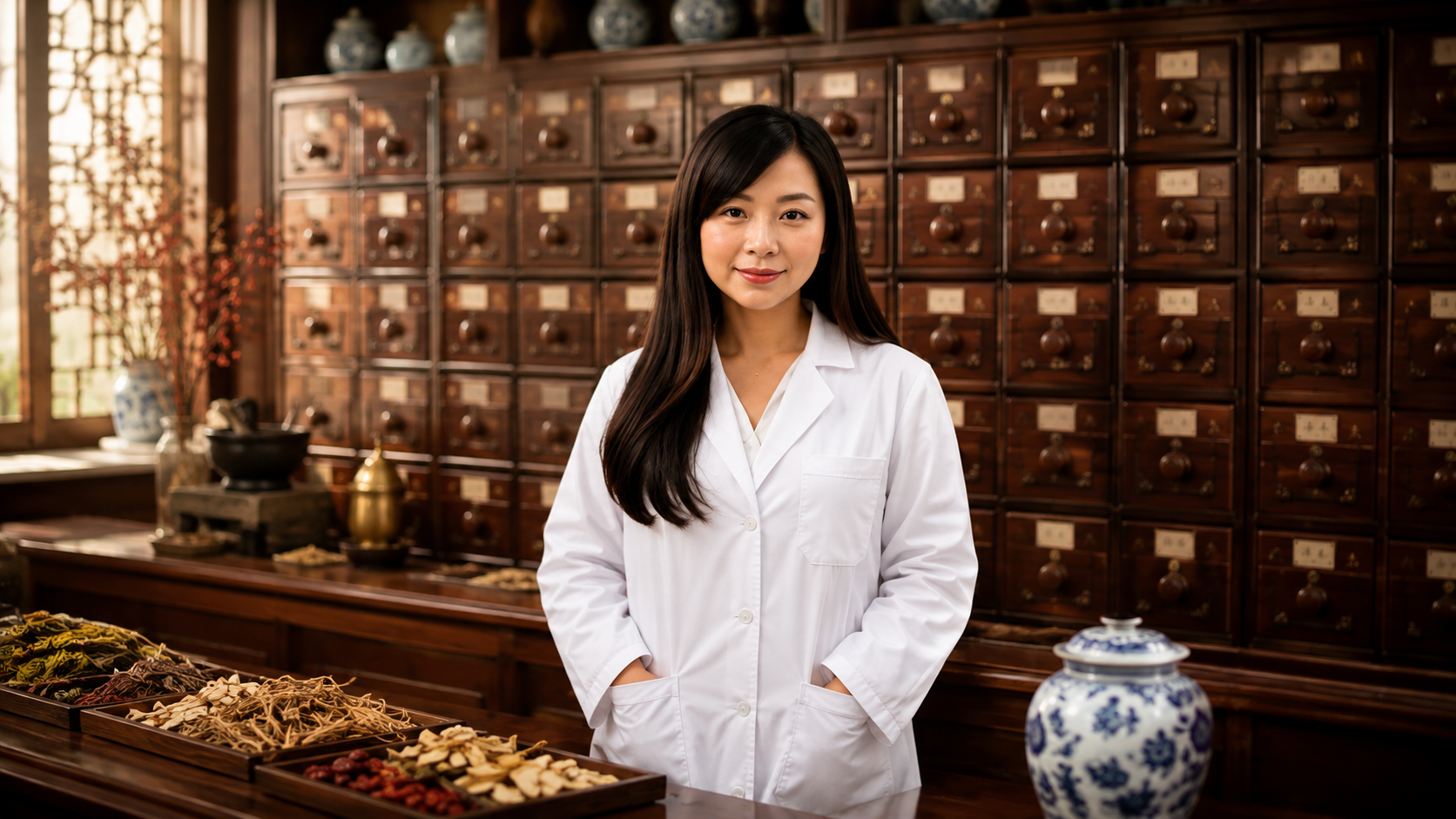
Another memorable feature of the UEWM clinic is the herbal pharmacy, where rows of traditional medicine cabinets contain carefully organized medicinal substances.
Each drawer carries a name and a history. Herbs such as huang qi, dang gui, bai zhu, fu ling, chen pi, and gan cao have distinct traditional properties and recognized roles within Chinese herbal formulas.
Together, these cabinets represent more than storage. They form a living classroom in which students can strengthen their knowledge of medicinal substances, formula composition, quality, identification, preparation, and professional responsibility.
Each Drawer Holds a Chapter of Materia Medica
Learning an herb involves much more than remembering its name. Students must study its traditional characteristics, functions, relationships with other ingredients, precautions, and appropriate role within a broader treatment strategy.
In the pharmacy, theoretical knowledge becomes practical. Students learn that careful work is essential at every stage, including reviewing a prescription, identifying the correct substance, evaluating quality, measuring accurately, and confirming that the final preparation follows the supervising practitioner’s instructions.
Precision, Patience, and Accountability
What may appear to be the simple act of selecting and weighing herbs requires concentration and discipline. Every prescription represents a patient’s trust, and every medicinal substance must be handled with care.
The work cannot be approached as an impersonal production line. It requires patience, accuracy, cleanliness, documentation, supervision, and respect for established safety procedures.
The Distinctive Fragrance of the Herbal Pharmacy
The pharmacy has a fragrance unlike perfume or flowers. It carries the scent of roots, leaves, bark, seeds, soil, and time. Each opened drawer releases another small reminder of the long history of Chinese herbal medicine.
Standing before the cabinets, I often wonder how many observations and trials were required for earlier generations to understand the characteristics of each substance—and how many physicians, scholars, herbalists, and teachers contributed to the body of knowledge we now study.
The drawers contain more than herbs. They hold part of humanity’s continuing effort to understand health, illness, the natural world, and the possibilities of healing.
A Place of Learning and Service
For patients, the pharmacy may represent an important step in their care. For students, it is an essential environment for professional development.
Here, students learn not only how to recognize and prepare medicinal substances, but also how to approach every task with respect for life and awareness of responsibility.
Each act of identifying, weighing, reviewing, and confirming a preparation helps develop the habits expected of a careful and ethical healthcare professional.
A Living Medical Tradition
The herbal pharmacy reflects the continuity of Chinese medicine—from classical materia medica to modern clinical education. It is a place where knowledge is preserved, professional skills are developed, and students learn to approach patient care with precision and respect.
Preserving a Tradition While Preparing for the Future
The UEWM clinic is more than a treatment space. It is a teaching environment where cultural heritage, academic study, supervised clinical experience, and compassionate care come together.
Its herbal fragrance, classical formula displays, portraits of medical pioneers, and traditional pharmacy cabinets remind us that Chinese medicine is a living tradition. It survives because each generation chooses to study it carefully, practice it responsibly, and pass it forward.
Fifteen years ago, I came because I was seeking relief. Fifteen years later, I returned because I wanted to learn. In the years ahead, I hope to continue strengthening my knowledge and clinical abilities, serve patients with humility, and contribute to the responsible continuation of this medical tradition.
May every student who enters the clinic develop both knowledge and character. May every patient feel respected and supported. And may the wisdom carried through generations continue to serve communities in the future.
Explore the University of East-West Medicine
UEWM offers educational opportunities in acupuncture and Traditional Chinese Medicine, including graduate-level study, advanced professional education, and supervised clinical learning.
Prospective students and community members are invited to learn more about UEWM’s academic programs, admissions process, and clinical services.
This article reflects the personal educational experience and perspective of the author. It is provided for general informational purposes and does not constitute medical advice, diagnosis, or a guarantee of treatment outcomes.
中文版本
国际医药大学诊所系列:传承、疗愈与生生不息的中医药文化
十五年后,我终于成为国际医药大学的一名学生。从曾经接受治疗的患者,到今天学习中医药知识与临床技能的实习生,这不仅是身份的转变,更是一个梦想逐渐成为现实的过程。
诊所不仅是患者接受针灸、中药及其他传统疗法服务的场所,也是学生连接课堂知识与临床实践的重要学习环境。在教师和临床指导人员的监督下,学生逐步了解医疗工作的严谨性、专业责任与关怀患者的重要意义。
第一部分:重回熟悉的中药香
刚进入诊所实习时,最让我难忘的不是忙碌的诊疗节奏,而是空气中弥漫着的中药香。那是一种融合着草木、根茎、树皮、种子与药材醇厚气息的独特味道,与现代医疗环境中常见的消毒水气味截然不同。
随着学习的深入,我渐渐明白,这股药香所代表的远远不只是中药材本身。它还承载着历代医者通过观察、实践、记录、总结和传授而积累的医学知识与文化智慧。
每当闻到这股熟悉的药香,我都会想起历代中医先贤悬壶济世、减轻病痛的精神,也更加体会到中医药传承并非易事。它需要耐心、纪律、认真学习,更需要在临床实践中保持谨慎、责任与诚信。
在诊所里,我看到患者带着疼痛、不适或长期健康困扰前来。在专业人员的监督与指导下,患者可以根据自身情况接受包括针灸、传统治疗方法及中药在内的个体化健康服务。
对我而言,这股中药香逐渐成为希望、信任、疗愈与责任的象征。它提醒着我,中医不仅是一门医学,也是一份需要每一代人认真学习、妥善守护并负责任地传承下去的文化遗产。
从患者到临床实习生
十五年前,我因病而来;十五年后,我因梦想而归。未来,我希望继续以谦卑之心学习和精进,在尊重患者、关怀生命的基础上,将所学知识服务于更多有需要的人。
第二部分:一面墙,承载千年智慧——经方验方展示墙
走进国际医药大学诊所,除了空气中弥漫的淡淡药香,另一处引人驻足的地方,便是承载中医药知识与文化的“古今经方验方集”展示墙。
这不仅是一面装饰墙,更是一座连接古今、沟通理论与临床学习的知识平台。
墙上陈列着经过精心整理的经方与验方资料。每一项展示都介绍了相关方剂的组成、药材特点、历史背景及其在中医理论体系中的传统应用。
其中既包括与《伤寒论》《金匮要略》等经典著作相关的重要方剂,也包括历代医家通过长期临床实践不断总结和完善的经验方。每一张方剂背后,都凝聚着无数医者的观察、思考与实践。
帮助患者更直观地认识中医
对于患者与来访者而言,这面墙让原本较为深奥的中医药知识变得更加直观。大家不仅能够认识常见药材,也能逐步理解一张方剂并不是多种药物的随意组合。
每一首方剂都体现着中医对于辨证、平衡、配伍和个体化治疗的系统思考。
学生身边的一位无声老师
对于学生而言,这面墙更像是一位无声的老师。每天经过这里,我们常常会停下脚步,观察药材,阅读方剂,并将课堂上学到的知识与真实的药物和临床概念联系起来。
书本中较为抽象的内容在这里变得更具体、更容易理解。它提醒每一位中医学子,学习中医不能只停留在背诵方剂名称和组成,还应理解方剂背后的医理、药物之间的关系,以及将知识用于患者服务时必须承担的责任。
在守正的基础上持续学习
对于教师和临床工作者而言,这面墙也可以成为教学与专业交流的平台。经典经方与历代经验相互辉映,体现了中医药在尊重传统基础上持续学习、评估与发展的理念。
一面墙,承载的是千年医学文化;一张方,凝聚的是历代医者的观察、专业精神与仁心。
认识中医药的一扇窗口
经方验方展示墙帮助患者、学生与来访者以更加直观的方式接触中医药。它连接着经典文献、药材知识、辨证思维、临床实践以及未来中医人才的培养。
第三部分:仰望古圣先贤,铭记医者责任
走进国际医药大学诊所,迎面而来的除了沁人心脾的淡淡药香,还有一面令人肃然起敬的古圣先贤文化墙。
墙上展示着五位在中国医学史上具有重要影响的代表人物:扁鹊、张仲景、华佗、孙思邈和李时珍。
他们跨越千年的目光静静注视着每一位走进诊所的人,仿佛诉说着中华医学源远流长的历史,也默默传递着中医药文化所蕴含的智慧与精神。
这不仅是一面人物展示墙,更是一堂没有讲台、没有课本,却能够使人长期受益的中医文化课。
患者认识中医历史的一扇窗口
对于来到诊所的患者而言,这面文化墙是一扇了解中医的窗口。它让人们看到,中医药文化并非一朝一夕形成,而是由历代医家不断探索人体、健康、疾病、自然与生活方式之间的关系,逐渐积累和发展而成。
提醒学生专业与医德并重
对于中医学子而言,这面墙更像是一群无声的导师。每天经过这些先贤画像,仿佛都在接受一次精神上的提醒。
中医不仅是治病救人的技术,更是一份沉甸甸的责任。学习中医不仅要研读经典、掌握理论、精进技能,还要培养谦逊、诚信、同理心、纪律与终身学习的态度。
医学知识最终应当服务于生命、健康和患者的福祉。
由一代又一代医者共同建立的传统
从《黄帝内经》所代表的理论基础,到《伤寒杂病论》所发展的辨证论治体系;从孙思邈所倡导的医德思想,到李时珍对本草知识的系统整理,中医药的发展是历代医者持续探索、实践、记录、教学与传承的结果。
每一次经过这面文化墙,我都会不由自主地放慢脚步,抬头凝望这些医学先贤的画像。
我常常思考,在漫长的历史长河中,前人经历了多少次观察、尝试、成功、失败与坚持,才将关于生命与健康的知识一点一滴积累起来,并最终传递到我们这一代中医学子的手中。
中医的传承,不只是传承一张方、一味药或一根针,也是在传承尊重生命、服务患者、诚实求知和承担责任的精神。
知识与品格必须共同成长
医学教育不仅要培养专业能力,也要培养医者的品格。技术知识固然重要,同理心、责任心、谦逊态度以及对每一位患者的尊重同样不可缺少。
第四部分:百子柜里的千年智慧——走进中药房
走进国际医药大学诊所,除了淡淡的药香令人心神安定,最吸引人驻足的地方之一,便是药房里整齐排列的传统百子柜。
一个个古朴的药柜、一格格精巧的抽屉,安静地存放着多种中药材,也保存着中华医学长期积累的知识与传统。
这里不仅是调配中药的地方,也是中医药文化最真实、最鲜活的学习课堂。
一格药柜,一页本草
药房里的每一个抽屉都有自己的名称,也有其相应的传统知识与应用背景。
黄芪、当归、白术、茯苓、陈皮、甘草等药材,在中医理论体系中具有不同的传统属性、功能和配伍角色。
当它们按照药材分类整齐排列在百子柜中时,这些抽屉便不再只是储存空间,而成为学生学习药材识别、药性理论、方剂配伍、品质判断和临床责任的重要资源。
对于中医学子而言,认识药材不仅是记住名称,还需要学习理解每味药材的传统特点、配伍关系、注意事项及其在整体治疗思路中的适当位置。
精准、耐心与责任
在药房里,学生学习的不只是抓取药材,更是在学习严谨的专业态度。
每一次配药都需要认真核对处方、确认药材、检查品质、准确称量,并按照指导人员的要求完成复核。
从看似简单的一取一放,到每一克药材的准确称量,都需要专注、纪律和责任心。
这项工作不能被当作缺乏人情温度的流水线操作。每一张处方都承载着患者的信任,每一味药材都必须按照相应规范谨慎处理。
药房里独特而熟悉的气息
最令人难忘的,依然是药房里那股独特的中药香。
它不像香水那样浓烈,也不像花香那般轻盈,而是一种融合着草木、根茎、泥土、树皮、种子与岁月沉淀的气息。
每一次打开药柜,每一次取出药材,这股熟悉的药香都会轻轻弥漫开来,仿佛在诉说中医药跨越千年的历史。
站在药柜前,我常常会想,在没有现代科技的年代,前人经历了多少观察与实践,才逐步认识每一种药材的特点;又经过多少代医者、药师、学者与教师不断总结,才形成今天所学习的中药学体系。
这一格格药柜装的不只是中药,也装着人类不断探索生命、健康、疾病与自然关系的智慧结晶。
学习与服务并存的地方
对于患者来说,药房可能是其健康服务过程中的重要一环;而对于中医学子来说,药房则是专业成长不可缺少的课堂。
在这里,我们学习的不只是辨认药材、称量药物和理解方剂,更是在学习如何以敬畏生命、尊重患者的态度完成每一项工作。
每一次取药、称量、检查和复核,都是专业素养的培养,也是医者责任的实践。
一项仍在延续的医学传统
中药房连接着古代本草知识与现代临床教育。这里保存着传统,也培养着专业能力,并提醒学生在处理每一味药材和每一张处方时,都应保持精准、谨慎与尊重。
在传承中学习,在责任中前行
国际医药大学诊所不仅是一个医疗服务空间,也是文化传承、课堂教学、监督式临床实践与患者关怀共同汇聚的学习环境。
诊所里的中药香、经方验方墙、古圣先贤文化墙以及传统百子柜,都在提醒我们:中医药是一项生生不息的医学传统。
它之所以能够延续,是因为每一代人都愿意认真学习、谨慎实践、负责任地传授,并根据时代需要继续探索和发展。
十五年前,我因病而来;十五年后,我因梦想而归。
未来,我希望继续精进知识与临床能力,以谦卑、严谨和关怀之心服务患者,也为中医药文化负责任的传承贡献自己的一份力量。
愿每一位走进诊所的学生都能够同时成长知识与品格;愿每一位患者都能感受到尊重与关怀;也愿这份由历代医者传递而来的智慧,在未来继续服务更多社区与生命。
了解国际医药大学
国际医药大学提供针灸与中医药相关教育项目,包括研究生阶段学习、专业进阶教育以及在指导和监督下开展的临床学习。
欢迎有志于中医药教育、临床实践与专业发展的学生,以及希望了解诊所服务的社区成员,进一步探索学校课程、招生信息及临床资源。
本文记录作者个人的学习经历与感受,仅供一般教育和信息参考,不构成医疗建议、诊断、治疗承诺或疗效保证。如有健康问题,请咨询具备相应资质的医疗专业人员。

You may also like
How to Identify Ashi Points for Musculoskeletal Pain

UEWM evening classes: Keep learning while you work