

acupuncture for stress and sleep: A Practical Guide
Acupuncture for stress and sleep is an approach some people explore when ongoing tension, racing thoughts, or disrupted routines make it harder to rest. This educational guide explains how acupuncture may support stress management and better sleep, what current evidence can and cannot show, and how to consider treatment safely.
Stress and sleep often influence one another. A demanding day may leave the body feeling alert at bedtime, while a poor night’s sleep can make ordinary pressures feel more difficult the next day. Over time, this pattern may affect concentration, mood, energy, and daily habits. Acupuncture is one complementary option that some adults use alongside established sleep and stress-management strategies. It should be viewed as part of a broader plan rather than a guaranteed solution.
Understanding the possible connection
Acupuncture is a traditional practice in which a trained practitioner places very thin, sterile needles at selected points on the body. Explanations for its effects differ. Traditional acupuncture describes patterns of energy flow and balance, while modern research has examined possible effects involving the nervous system, muscle tension, pain processing, and relaxation responses.
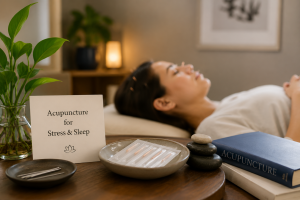
For stress, the experience of lying still in a quiet setting, breathing slowly, and receiving focused attention may itself be calming. Some people report feeling relaxed during or after a session. Research on acupuncture for anxiety, stress, and insomnia has produced varied findings, with some studies suggesting benefits and others showing limited or uncertain effects. Differences in study design, treatment schedules, comparison groups, and individual responses make broad conclusions difficult.
Sleep may be affected indirectly. If a person experiences less physical discomfort or feels less keyed up in the evening, falling asleep may become easier. However, acupuncture is not a replacement for evaluation when sleep problems are persistent, severe, or linked with another health concern.
What a session may involve
A first appointment commonly begins with questions about sleep timing, stress, general health, medications, and treatment goals. The practitioner may ask when difficulty began, how often it occurs, and whether concerns include trouble falling asleep, waking during the night, or waking too early. Sharing accurate information helps the practitioner plan appropriately and identify situations that may require medical referral.
During treatment, the person usually rests in a comfortable position while needles are inserted at selected points. Sensations vary. Some people notice a brief prick, pressure, warmth, heaviness, or mild tingling; others notice very little. A session may last roughly 20 to 60 minutes, depending on the practitioner and approach. Feeling calm afterward is possible, but results and timing differ from person to person.
Questions worth asking beforehand
- What training, licensing, or certification does the practitioner have?
- Which concerns can acupuncture reasonably address, and what outcomes should be tracked?
- Are single-use sterile needles used?
- How many sessions are being suggested, and how will progress be reviewed?
- What should be reported before treatment, including pregnancy, bleeding concerns, implanted devices, or skin problems?
Building a sleep-supportive routine
Acupuncture is more likely to be useful within a routine that supports the body’s regular sleep-wake pattern. Evidence-based habits can include keeping a fairly consistent wake time, allowing enough time for sleep, reducing bright light and stimulating activities before bed, and making the bedroom comfortable, quiet, and suitably cool. Limiting caffeine later in the day and avoiding heavy meals or alcohol close to bedtime may also help some people.
Stress-management skills can complement these habits. Slow breathing, progressive muscle relaxation, journaling, gentle movement, and brief mindfulness exercises may help create a transition between daytime demands and bedtime. If worry tends to appear as soon as the lights go out, writing down concerns and next-day tasks earlier in the evening may reduce the pressure to solve everything in bed.
Track patterns rather than perfection
A simple sleep and stress record can provide useful information without turning bedtime into a performance test. Note approximate bed and wake times, nighttime awakenings, caffeine or alcohol use, physical discomfort, stress level, and how rested you feel. Look for patterns over several weeks instead of judging one night. This record can also help you and a healthcare professional decide whether another assessment is appropriate.
Safety, limits, and realistic expectations
When performed by a properly trained practitioner using sterile, single-use needles, acupuncture is generally considered low risk for many people. Temporary soreness, small bruises, light bleeding, dizziness, or fatigue can occur. Rare but serious complications are possible, particularly if technique or hygiene is poor. Seek prompt medical attention for symptoms such as severe pain, difficulty breathing, fainting that does not resolve, or signs of infection.
Tell the practitioner about medicines and health conditions before treatment. Extra care may be needed for people who take blood-thinning medication, have a bleeding disorder, are pregnant, have reduced sensation, or have an active skin infection near a treatment area. A qualified practitioner should welcome questions and should not pressure anyone into a large prepaid treatment package or promise a guaranteed cure.
It is also important to consider why sleep is being disrupted. Loud snoring, gasping during sleep, unpleasant leg sensations, persistent pain, mood changes, substance use, medication effects, and symptoms of depression or anxiety may require evaluation by a licensed healthcare professional. Persistent insomnia may benefit from cognitive behavioral therapy for insomnia, often called CBT-I, a structured approach with strong support for many long-term sleep difficulties.
Making an informed decision
Deciding whether to try acupuncture can begin with a clear, modest goal. Instead of expecting it to “fix” sleep, you might aim to notice whether evening tension, time needed to fall asleep, or next-day restfulness changes over a defined period. Discuss the plan with a healthcare professional if you have ongoing symptoms, complex medical needs, or uncertainty about whether acupuncture is suitable.
Cost, travel, time, comfort with needles, and access to a reputable practitioner all matter. Consider whether the treatment fits your preferences and whether the proposed schedule is practical. If you try it, keep other helpful routines steady when possible so you can better understand what may be contributing to any change. Stop and reassess if treatment causes concerning symptoms or if it increases anxiety.
The most balanced view is that acupuncture may help some people feel more relaxed or sleep better, but responses vary and research remains incomplete. Its potential value is best considered alongside sleep education, stress skills, medical assessment when needed, and realistic expectations.
Responsible next steps
Start by identifying your main concern, recording sleep and stress patterns for a short period, and discussing persistent symptoms with a qualified healthcare professional. If you choose acupuncture, select a properly trained practitioner, share relevant health information, ask about hygiene and fees, and use the treatment as one part of a broader, evidence-informed plan.
Educational disclaimer: This article is for general education only and is not medical advice, diagnosis, or a substitute for care from a qualified healthcare professional.
Related resources
Authoritative references

You may also like

Welcome to the Fall 2026 Chinese Medicine Semester

How to Identify Ashi Points for Musculoskeletal Pain